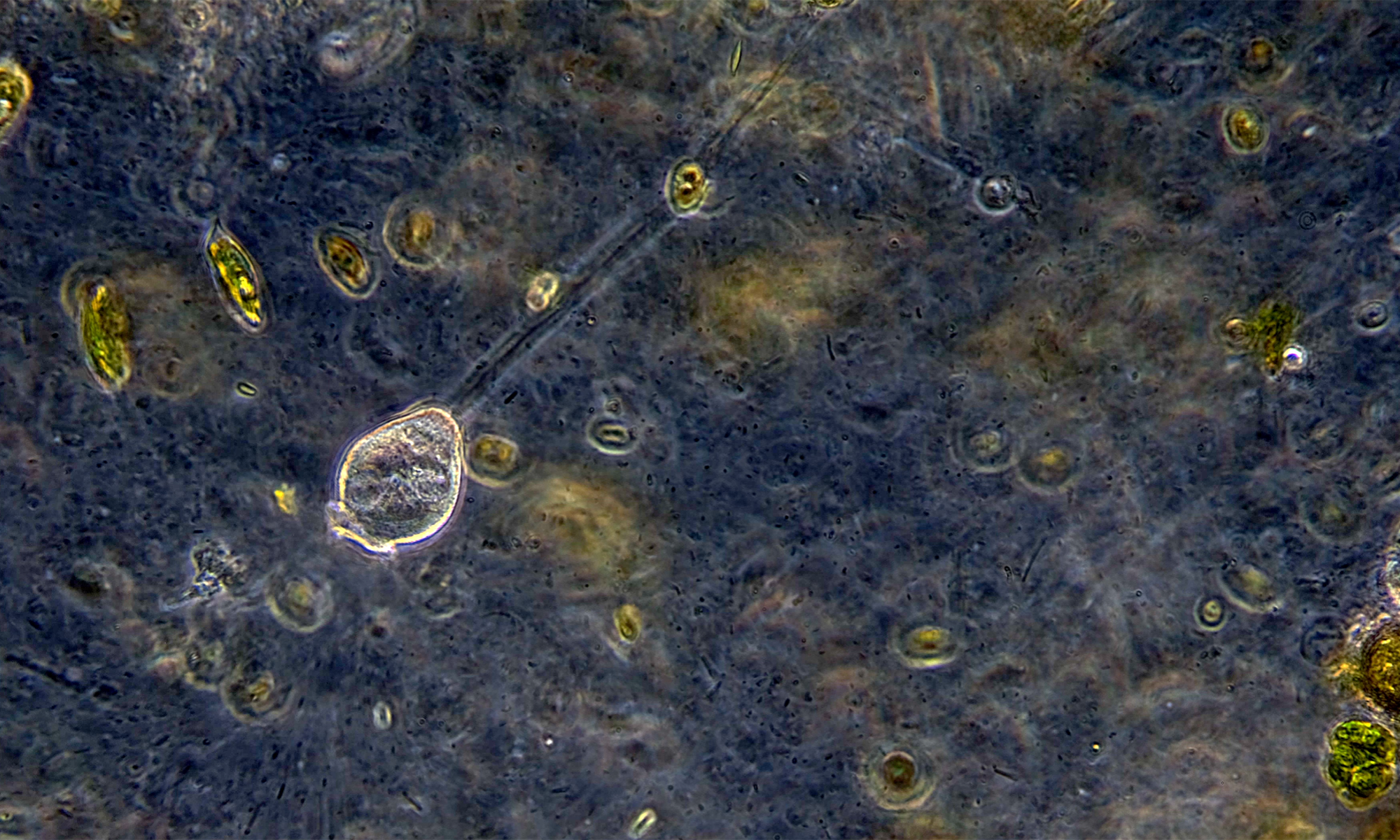
Vorticella is a unicellular ciliate, meaning it’s a single cell with hair-like organelles called cilia that help it move and feed. They are bell-shaped and have a stalk that attaches them to surfaces in freshwater and some marine environments.
Taxonomy
- Kingdom: Chromista (Some classifications place it under Protista)
- Phylum: Ciliophora
- Class: Peritrichia
- Order: Sessilida
- Family: Vorticellidae
- Genus: Vorticella
- Species: Multiple species (e.g., V. convallaria, V. microstoma)
Structure of the Vorticella Cell
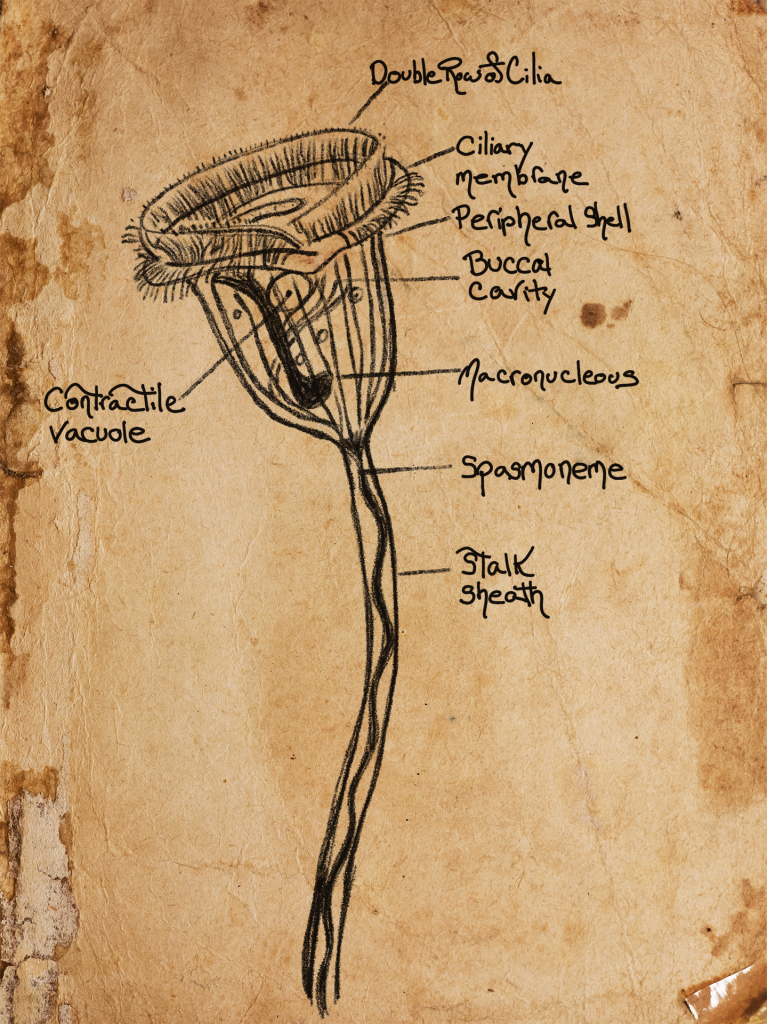
- Ciliary membrane: This is the outermost membrane of the cell, and it is covered in cilia. Cilia are hair-like structures that help the Vorticella to move food and water around.
- Macronucleus: This is the large nucleus of the cell, and it contains the genetic material of the Vorticella which controls the essential activities like growth, metabolism, and protein synthesis. The macronucleus is polyploid in that it contains multiple copies of each chromosome extending into the hundreds or thousands.
- Contractile vacuole: This is a sac-like organelle that helps the Vorticella to regulate its water balance.
- Spasmoneme: This is the stalk that the Vorticella uses to attach itself to surfaces. The spasmoneme can contract, which allows the Vorticella to move around.
Macronucleus
The DNA structure is significantly rearranged compared to a typical nucleus.
- Amplification: Certain genes essential for daily functions are amplified, meaning there are many copies of these genes within the macronucleus. This helps ensure efficient production of the necessary proteins for the cell’s needs.
- Elimination: Non-essential gene sequences are eliminated from the macronucleus. This helps streamline the genetic information and reduces the amount of DNA the cell needs to maintain.
- Fragmentation: The remaining DNA is fragmented, meaning it’s broken up into smaller pieces. These fragments are then rearranged and reassembled in a new order specific to the macronucleus.
- Telomere loss and addition: The ends of chromosomes (telomeres) which normally prevent them from deteriorating, are lost during macronuclear development. New sequences are added at the ends to maintain stability.
These rearrangements result in a smaller set of genes actively expressed in the macronucleus compared to the micronucleus. This streamlined set allows the Vorticella to focus its resources on essential daily functions.